Loom Lines is a factory-direct clothing manufacturer in Sialkot, Punjab, Pakistan, and polo shirts sit in our Tees & Tops range as one of the most technical styles we make. A polo has a collar, a placket, buttons, side vents, and a logo position that all have to stay balanced, and a weak factory shows it in twisted collars, uneven plackets, and loose buttons. We cut, sew, embroider, and finish every polo in our own facility, so a UK golf club, school, restaurant group, gym, or fashion label deals with one production team from first sample to packed carton.
Orders start at 50 pieces per style and colour, and bulk production takes 12 to 18 days after sample approval. In 14 years of production, we have shipped 2.4M+ garments to buyers in 35+ countries, with 98% of orders delivered on time.
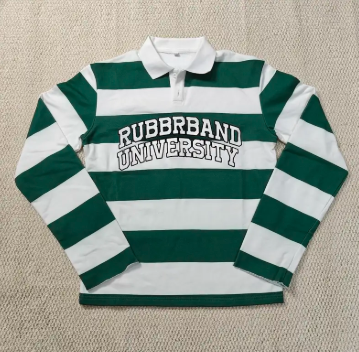
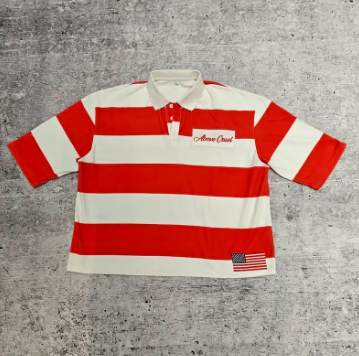
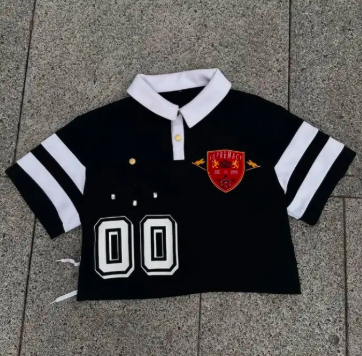
Cotton piqué is the textured knit behind the classic polo, and it is the usual choice for corporate, club, school, and hospitality uniforms. We build it with a flat knit, rib or self-fabric collar, a two or three-button placket, side vents, and rib cuffs, and we match the pattern to your reference polo if you have one.
For golf, gym, and coaching staff, we make polos in performance polyester, polyester piqué, and cotton-poly or spandex blends that breathe and dry quickly. Polyester also takes sublimation, which gives full-colour sleeve panels and all-over designs that embroidery cannot reproduce.
Cotton jersey, interlock and honeycomb knits give a softer or more textured polo for streetwear and lifestyle labels. Fits run from regular and slim to relaxed, oversized, boxy, athletic and longline, with contrast collars, tipped collars, hidden or zip plackets and custom button finishes. If your range also needs printed tees to sit alongside it, see our graphic t-shirts.
Short and long sleeve polos, tipped sleeves and rib cuffs are built into the pattern at the sampling stage. We grade sizes for men, women, unisex and youth ranges from custom size charts, so a school or club can order adult and junior polos in the same colour and trim.
Fabric decides how a polo wears, washes and takes a logo, so settle it before you settle the decoration. We work with cotton piqué, combed cotton, cotton jersey, interlock, honeycomb, polyester piqué, performance polyester, cotton-poly blends, spandex blends and custom compositions. Weights run from lightweight performance knits through 180, 200, 220 and 240 GSM up to 280 and 350 GSM heavyweight piqué, depending on whether the polo is for summer staff wear, golf, retail or a premium private label range.
A heavier piqué holds its collar shape and hides stitching show-through behind embroidery, while a lighter knit suits warm-weather and sportswear use. Our fabric sourcing and GSM customisation service lets you compare weights and blends before you commit. For private label buyers, fit consistency matters most, because customers expect the same chest width, shoulder width, sleeve length, body length and collar shape in every size and every reorder.
A polo collar, placket and textured fabric all limit which logo method works best. If you are still comparing options, our guide to types of branding sets the main methods side by side. Before production, we review your artwork for logo size, placement, thread colour, Pantone matching where relevant, fabric suitability, and wash durability.
Embroidery is the default for polos because it stays sharp wash after wash, which is why uniform buyers choose it for left-chest logos, sleeve marks, back-neck branding and sponsor logos. We digitise your artwork, match thread colours and check placement at sampling, and you can read more about embroidery at Loom Lines.
Textured piqué can break up fine print detail, so larger or multi-colour artwork often looks cleaner as a transfer. We run screen printing for bold, repeat bulk graphics and DTF printing for detailed artwork, with DTG, heat transfer and foil printing available where the fabric and design suit them.
Sublimation works on polyester polos and gives full-colour panels, sleeve designs and all-over patterns for golf and sports programmes. Our sublimation printing is done in-house, so colour and placement are checked before the run, and it is the right choice when the design needs more than a chest logo.
Many UK buyers first find polo suppliers through agents who place orders with outside factories. The difference shows up in who controls the garment at each stage.
Question | Loom Lines (factory-direct) | Typical trading agency |
|---|---|---|
Who cuts and sews your polo? | Our own facility in Sialkot | An outside factory chosen per order |
Who embroiders or prints it? | Our in-house embroidery, screen printing, DTF, DTG, and sublimation teams | Often a separate decorator |
Who answers a collar, fit or colour question? | The team handling your production | A go-between relaying messages |
Quality checks | Three stages: fabric and trim inspection, in-line inspection, final pre-shipment inspection | Depends on the factory used |
Minimum order | 50 pieces per style and colour | Set by the agency and the factory behind it |
Fewer hand-offs mean fewer places for a collar shade, a logo position or a size grade to go wrong. You can read more about how we work on our page about why UK buyers choose Loom Lines.
Polos need tighter checks than plain tees. Each order goes through three stages: fabric and trim inspection before cutting, in-line inspection during sewing and decoration, and a final pre-shipment inspection. We check fabric quality and GSM, cutting accuracy, stitching strength, collar shape, placket balance, button attachment, embroidery quality, print clarity, side vents, hem finishing, label placement, and measurements against your approved size chart.
Our Quality Guarantee sets out what we check and what happens if something falls short.
If you already have a decorator or want to brand polos yourself, our blank polo shirts give you plain, consistently sized stock in your chosen fabric, weight and colour, ready for printing or embroidery.
For a retail or uniform range, we build the whole polo around your brand: your fit, your collar, your placket, your buttons, and your woven or printed neck labels, hem tags and care labels. Our private label clothing service takes you from a first sketch to finished stock under your own name.
Our polo orders typically come from UK golf and sports clubs, schools and colleges, restaurant and retail staff uniform buyers, gyms and fitness studios, promotional and merchandise companies, and start-up labels building a first capsule. A 50-piece minimum per style and colour suits a staff uniform run or a first brand drop equally well, and once a sample is approved, we scale the same fabric, pattern, embroidery set-up, labels and packing into bulk.
Send your brief. Share your tech pack or reference polo, artwork, size chart, preferred fabric, and target quantity.
Confirm the build. We agree on fabric and GSM, collar, placket, button detail, decoration method, and labels.
Pattern and sample. We cut the pattern, grade sizes, and make a sample with your fabric, fit, and logo placement so you can check it by hand.
Approve the sample. Once you approve it, bulk production begins, and the 12 to 18 day lead time runs from that approval.
Bulk production and in-line checks. Cutting, stitching and decoration run in our own facility, with collar, placket, sleeve, hem and measurement checks during production.
Final inspection, packing and dispatch. Your polos are audited, packed to your labelling and folding spec, and shipped to your UK address or warehouse.
You can see each stage in more detail on our process page.
Send us your logo, a reference polo or tech pack, your fabric preference and target quantity, and we will come back with fabric options, decoration advice and pricing. To start, contact Loom Lines with your brief.
Our minimum is 50 pieces per style and colour. That applies to custom polos with embroidery, printing, or private label branding, and it suits staff uniform runs, club kit, and first brand drops.
Bulk production takes 12 to 18 days after you approve the sample. Because cutting, stitching, embroidery, and finishing all happen in our own facility, the timeline does not depend on outside subcontractors.
Yes. Embroidery is done in-house for left-chest logos, sleeve marks, back-neck branding and sponsor logos. Send vector artwork if you have it, and we will digitise it, then check logo size, placement, and thread colour at sampling.
Cotton piqué is the classic choice for uniforms and clubwear, and we offer it from 180 GSM up to 350 GSM heavyweight. Cotton jersey, interlock, and honeycomb suit fashion polos, while performance polyester and blends suit golf and sportswear because they dry quickly and accept sublimation.
Yes. Collars can be flat knit, rib, self-fabric, contrast, or tipped, and plackets can be two-button, three-button, hidden, zip, or contrast, with custom button finishes, side vents, and rib cuffs. Send a reference polo or tech pack, and we will build the pattern from it.
Yes. We grade men’s, women’s, unisex, and youth polos from custom size charts, which suits school, club, and staff uniform programmes that need adult and junior sizes in the same colour.
Yes. We can sew in your woven or printed neck labels, hem tags and care labels and attach hang tags so each polo ships as finished retail stock. See our custom labels and tags service for the options.
Yes. Polos can be folded, poly bagged and packed to your specification, with barcode stickers and boxes where needed, ready for a shop shelf or an online fulfilment centre. Details are on our custom packaging and retail finishing page.
Yes. We make a sample with your fabric, fit and logo placement, and the 12 to 18 day production window starts only once you approve it. That one check catches most collar, colour, and placement problems before they reach bulk.
Every order passes three stages: fabric and trim inspection, in-line inspection, and a final pre-shipment inspection. On polos, we check collar shape, placket balance, button attachment, embroidery position, side vents, and measurements against your approved size chart.
WhatsApp us